Record what your company measures, in its own add-on.
An add-on records facts about your lots, such as the moisture of each intake. Start from a ready-made one or bring your own: every version goes through automated checks, then waits for your owner's approval.

In figures
- 8Automatic checks before an own rule or add-on is usedCounted in the platform’s code.
- 3Ready-made add-onsCounted in the add-on gallery.
Counted in the platform’s code or measured on the A-REX test environment, November 2026. Not customer results.
The problem
From a spreadsheet to readings on the lot
The figures that set a lot's price and quality live outside the records.
An add-on never stops an operation: it records facts about your lots and never changes their owner, quantity, status or certificates.
Kept in a spreadsheet
Moisture, grading and premiums are written on paper or in a file, and never travel with the lot.
No field for it
Every company measures something of its own, and a fixed form has no place for it.
Hard to show later
When a buyer asks how a figure was measured and when, nobody can show the record as it was.
What it does
Start from a ready-made add-on
Moisture at intake, a fair-trade certificate per lot and the premium paid to the producer. Start from a copy and change it to fit; the copy goes through the same checks and approval as any version.
Read the full moduleChecked before anyone approves
Each version passes ten automated checks in an isolated container without internet access, among them thousands of random operations that must leave every lot consistent. A version that fails one is never offered.
Read the full moduleAverages, lowest and highest
Count, sum, average, lowest and highest, by product, lot, site or partner, on dashboards and in reports. An average is never mixed across groups or companies, and corrected records are left out.
Read the full moduleVersions you choose
Move to another version when you are ready. Records stay under the version that wrote them, so last season's figures keep their meaning.
Read the full moduleWho sees what
For each kind of record: internal, shared with the partners you connect, or public. Sister companies of your organization can use the same add-on, and both sides agree first.
Read the full moduleHow it works
From a template to readings your buyers can check.
Choose or upload
Start from a ready-made add-on, or a developer uploads your company's own.
A-REX checks the code
Ten automated checks run on every version. A-REX checks the code, not the facts it will record.
Your owner approves
With a second factor. The person who uploaded a version cannot approve it, unless they are the only owner.
Your people record
Readings go on the lot, in reports and in the exports your buyers read.
Readings where the work happens
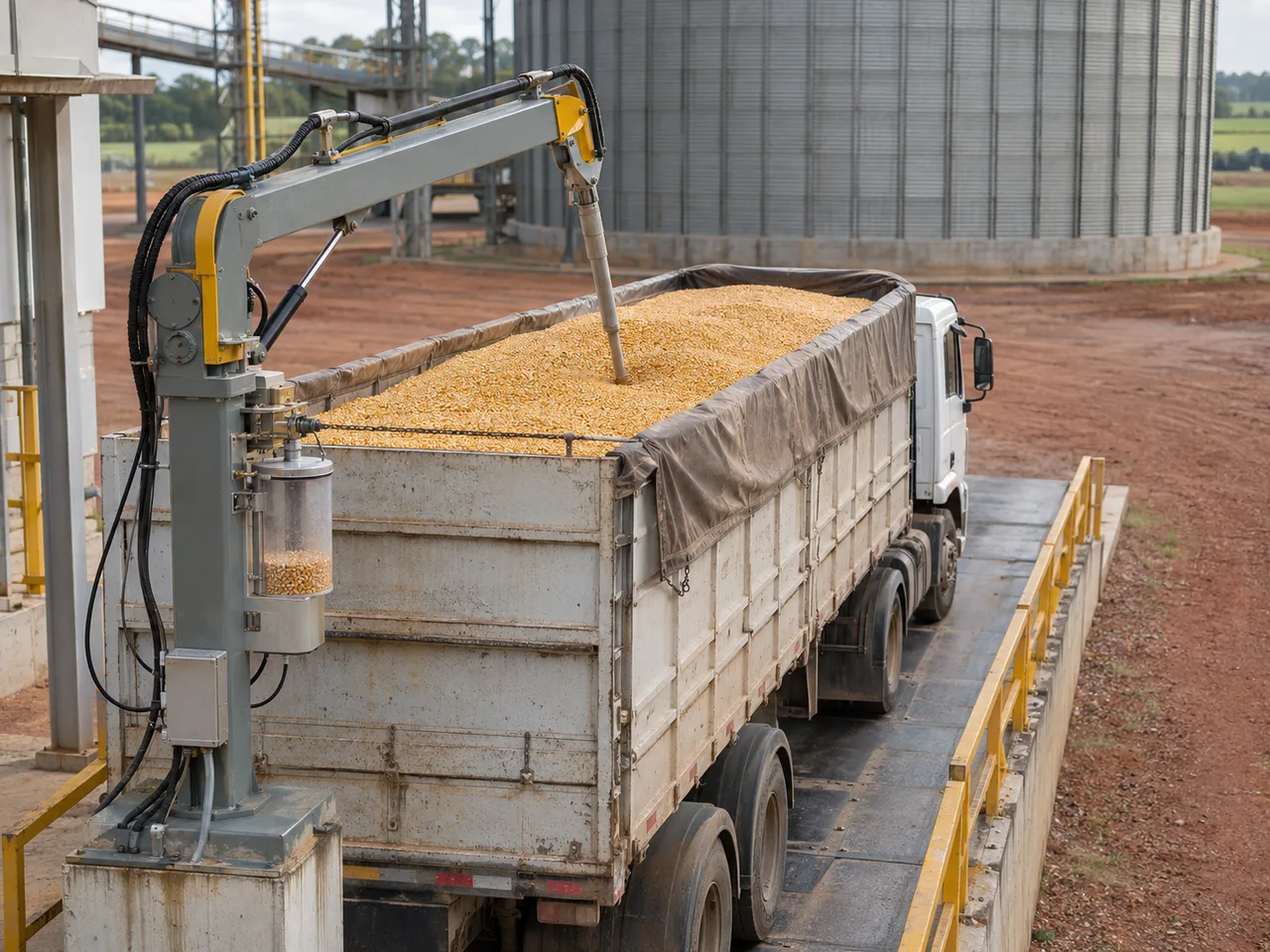
The reading is taken at the scale and recorded on the lot it belongs to, with who measured it, how and when.
- Recorded by your people, or prepared by the assistant for a person to confirm.
- Shown everywhere as declared by your company.
- Corrected by a new record, never overwritten.
What an add-on is
Add-ons are part of the lot rules catalog. Your company's own sit beside A-REX's, in the version your owner approved.
| Question | Answer |
|---|---|
| What it records | Facts about lots, in the record types and fields its version declares. It never stops an operation. |
| Ready-made add-ons | 3 today: moisture at intake, a fair-trade certificate per lot and the premium paid to the producer. The catalog is provisional while the platform is in alpha. |
| What A-REX checks | The code: ten automated checks per version, in an isolated container. Not the facts your company records with it, which stay your company's own declaration. |
| What goes on the ledger | A fingerprint of each record. Values you mark as private, amounts of money and personal data stay off it, encrypted for your company. |
| Where the values appear | On the lot's page, in dashboards and reports, in EPCIS events and product passports, and in what your verifiers read. |
| For developers | A kit with the add-on's code, tests and descriptor, to change a template or write your own and upload it. |
| Not yet | Automations cannot record an add-on's readings yet, and forms do not work offline. |
Who uses it
Owners decide which add-ons the company uses; the people at the scale record the readings.
Operator
Records and corrects readings on the lot's page.
Owner
Approves each version and who may see its records, with a second factor.
Developer
Starts from the kit, tests the add-on and uploads it for the checks.
Buyer or verifier
Reads the readings you share, with who declared them and when.
A short free text is public once recorded, so it never holds personal data.
Resources
The guides, the open standard and the details behind every screen.
Tell us what you measure.
Moisture, grading, residues, premiums: tell us what your company records today, and we will show you the add-on that fits in a sandbox.
Explore more